SSIF Takes Dual Role in National Water Carrier through Equity Stake and Participation in Bank Loan Syndication
April 21, 2026
Prime Minister witnesses water carrier agreement, paves way for project rollout
Prime Minister Jafar Hassan on Tuesday witnessed the signing of the final technical and legal agreement for the National Water Carrier Project at the Prime Ministry, marking a key milestone toward achieving financial closure in July and launching construction works next summer. The project’s capital cost is estimated at approximately $4.3 billion, with total costs, including financing, projected to reach $5.8 billion.
The agreement follows 16 months of government negotiations with stakeholders to improve financing terms, secure competitive pricing, and enhance engineering and technical specifications.
The National Water Carrier Project is a first-of-its-kind initiative globally, combining large-scale seawater desalination of 300 million cubic meters annually, advanced pumping systems reaching elevations of up to 1,100 meters, and a 450-kilometer pipeline network, supported by renewable energy solutions utilizing advanced, environmentally sustainable technologies.
The project is expected to supply around 40 percent of the Kingdom’s drinking water needs, with operations scheduled to begin in 2030, significantly strengthening national water security.
Annual production from the project is equivalent to nearly the total storage capacity of all dams in the Kingdom and nearly three times the output of the Disi Water Project. It will increase overall water supply by 40 percent, raising per capita availability from 60 to 110 cubic meters annually, and improving distribution to reach three days per week across all governorates.
The agreement includes reducing the benchmark water cost from around $3 per cubic meter in 2024 to approximately $2.7, with ongoing discussions to finalize inflation adjustments.
The government will continue to subsidize water tariffs, noting that the Water Authority’s debt accounts for about 12 percent of total public debt and is expected to rise due to the high capital intensity of strategic water projects.
Over the medium term, the government aims to contain sector debt through expanding efficient water projects, improving wastewater treatment, reducing non-revenue water, and promoting conservation measures.
The project will alleviate pressure on conventional water sources and enhance supply reliability for industrial, agricultural, and economic sectors, ensuring sustainable availability through 2040.
It also includes the development of solar power plants with a capacity of approximately 300 megawatts, covering around 30 percent of the project’s energy requirements.
Implemented under a build-operate-transfer model, ownership of the project will revert to the government 26 years after operations commence. Financing will be secured through a consortium of 29 international donors and financial institutions, with grants totaling $663 million from partners including the United States, the European Union, Germany, the Netherlands, the United Kingdom, France, Italy, Japan, and the Green Climate Fund.
Meridiam will secure approximately $2.9 billion in private sector financing from a consortium of leading international financial institutions, including the World Bank Group, the European Investment Bank, the European Bank for Reconstruction and Development, the Islamic Development Bank, Proparco,, the private sector financing arm of the French Development Agency, the Japan International Cooperation Agency (JICA), the Green Climate Fund, and the OPEC Fund for International Development, among others.
The government is allocating $722 million to the project, marking the largest single capital expenditure in the budget, aimed at lowering the cost per cubic meter of water throughout the implementation phase.
A consortium of Jordanian banks, led by Housing Bank, will provide up to $1.1 billion in financing, with participation from the Social Security Investment Fund, which will also hold an equity stake alongside Meridiam.
The National Water Carrier Project is a cornerstone initiative under the Economic Modernization Vision and a top national priority for enhancing long-term water security.
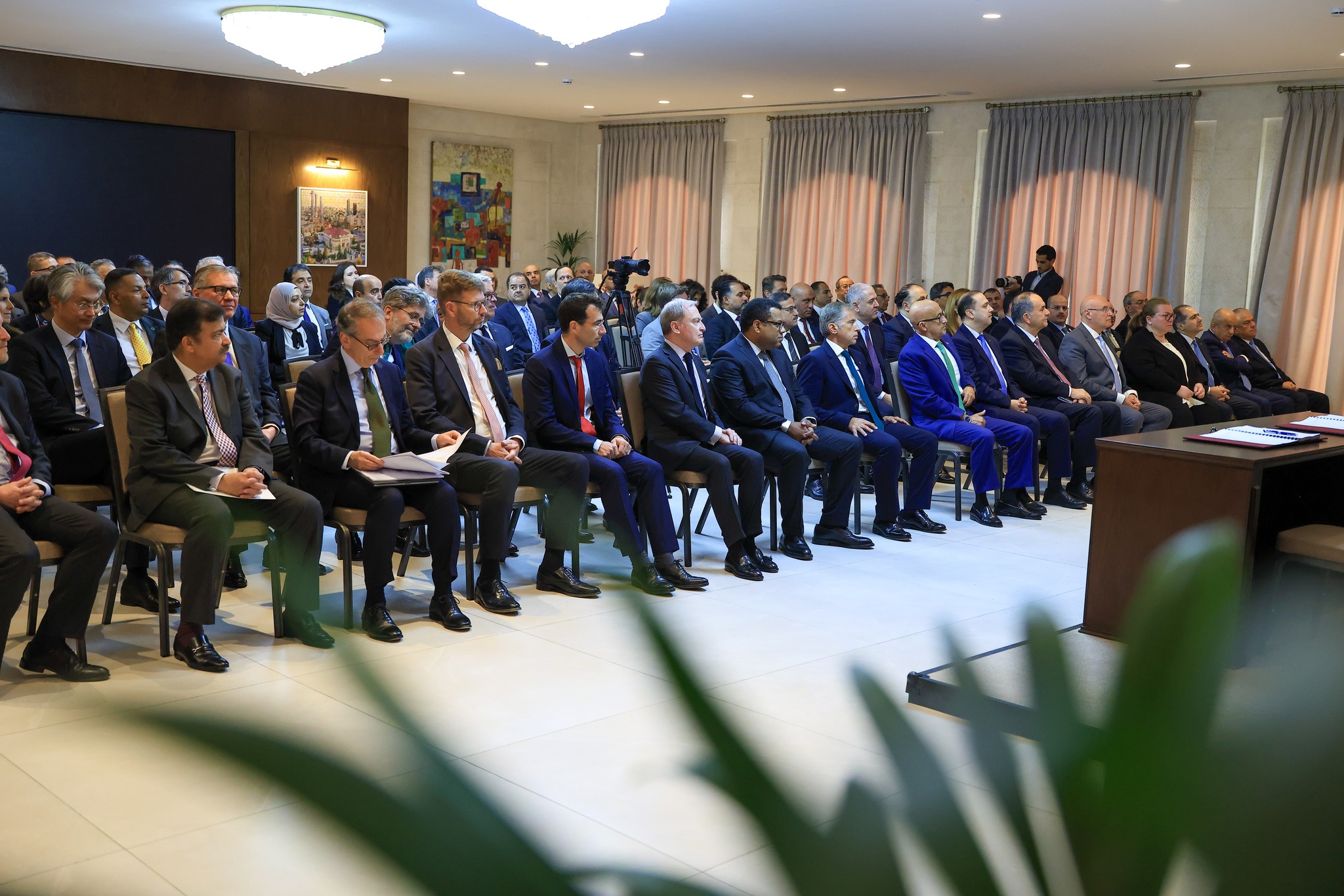
The agreement was signed by Minister of Water and Irrigation Raed Abu Saud and Meridiam Chief Executive Officer Thierry Deau, in the presence of ministers, officials, ambassadors, and representatives of donor agencies and investors.