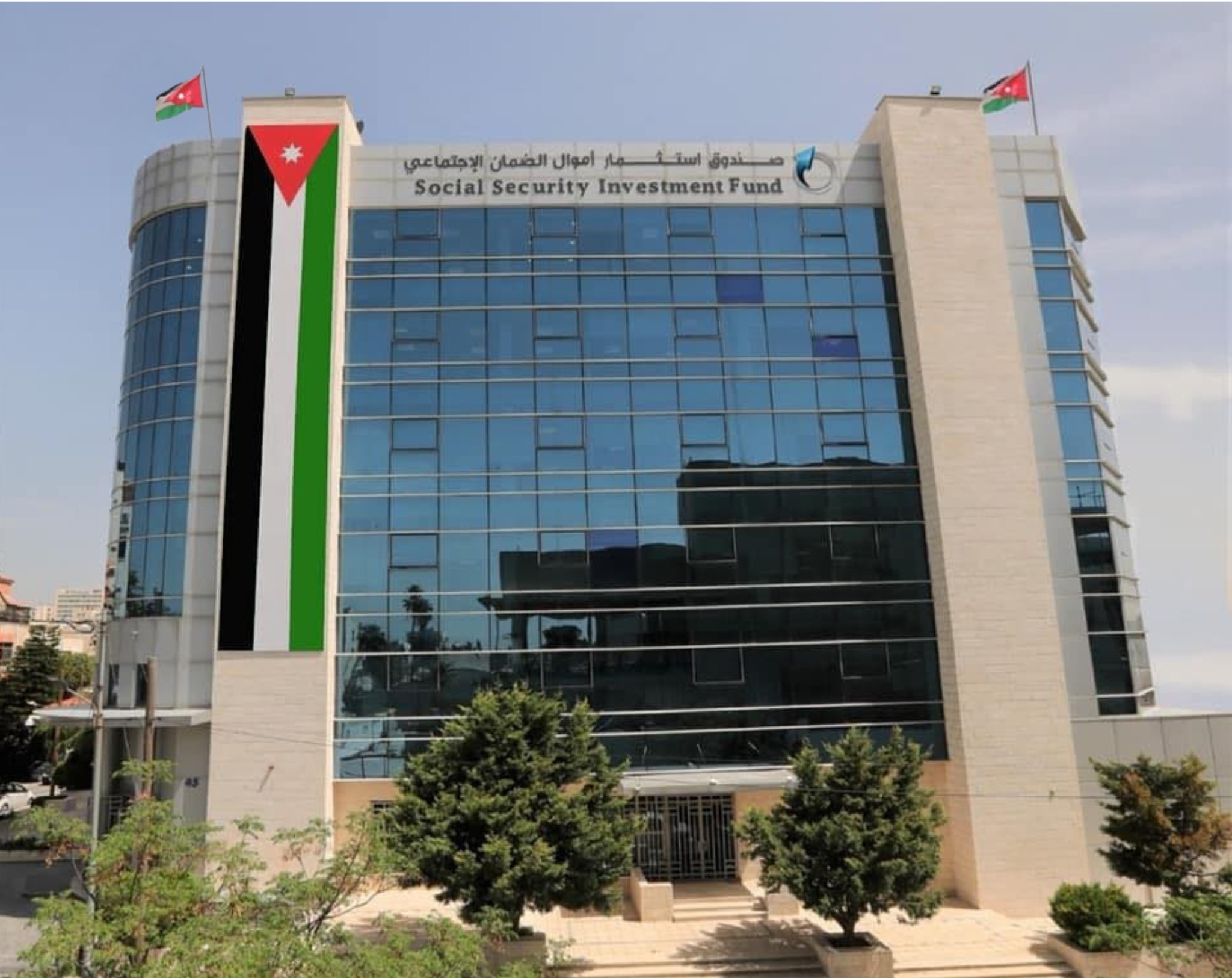
SSIF Solidifies Role As Strategic Anchor For Jordan’s National Infrastructure Agenda
April 20, 2026
Petra - As the government accelerates the execution of large-scale national projects in infrastructure, energy, and transport, the Social Security Investment Fund (SSIF) has emerged as a pivotal institutional partner.
With assets representing approximately 43 percent of Jordan’s GDP, the fund is increasingly leveraging its long-term capital to drive sustainable economic growth while ensuring the financial viability of the national pension system.
Established as the specialized investment arm of the Social Security Corporation, the SSIF has seen its assets grow from 1.6 billion JOD in 2003 to 18.6 billion JOD by the end of last year. This capital is now being deployed into high-impact national strategic projects, most notably the Aqaba Port Railway.
The fund's involvement in the rail project follows two integrated tracks: a direct 7 percent equity stake in the project company and indirect exposure via its substantial holdings in the Jordan Phosphate Mines Company (17 percent) and Arab Potash Company (10 percent).
Strategic Rationale and Risk Management
Economic experts emphasize that the SSIF’s participation in mega-projects aligns with a sophisticated investment philosophy centered on risk diversification and long-term yield. Khair Abu Sa'ilik, Chairman of the Economic Forum, noted that the fund acts as a "long-term institutional investor" rather than a short-term speculator.
"The SSIF's primary mandate is to protect and grow the wealth of its subscribers," Abu Sa'ilik stated. He argued that investing in tangible national assets – such as transport and energy infrastructure – stabilizes macroeconomic indicators and enhances investor confidence, which in turn bolsters the valuation of the fund’s broader portfolio.
Economic Multipliers and Private Sector Synergy
The fund’s entry into strategic sectors is expected to generate significant economic ripple effects, including:
– Job Creation: Stimulating direct and indirect employment through large-scale construction and operational phases.
– Economic Clusters: Encouraging the growth of small and medium-sized enterprises (SMEs) through forward and backward linkages to major projects.
– Foreign Direct Investment (FDI): Serving as a "de-risking" partner whose presence encourages local and international private sector players to enter Public-Private Partnerships (PPPs).
Raad Al-Tal, Head of the Economics Department at the University of Jordan, added that the SSIF provides a stable, domestic source of financing for critical sectors like water and energy. He asserted that the fund's participation reflects state confidence in the economy's durability and directs national savings toward productive local investments.
Governance and Feasibility
While the developmental impact is clear, economists stress the necessity of rigorous governance. Dr. Adli Kandah highlighted that investment decisions must remain independent and based strictly on specialized feasibility studies. "Social security funds are the savings of the people," Kandah remarked, noting that projects in transport and energy must demonstrate clear future cash flows and risk-adjusted returns to ensure the fund can meet its future obligations to retirees.
The SSIF continues to evaluate a robust pipeline of opportunities linked to the Economic Modernization Vision, including the National Water Carrier (Desalination) project, the Risha gas pipeline, and a new phosphoric acid plant. Beyond industry and infrastructure, the fund is exploring promising horizons in fintech, education, and real estate development, maintaining a balanced approach between national development and financial sustainability.